← Back to the series
Story 05 Founder, Storyo

Elina Ashimbayeva

Kazakhstan → Aotearoa

10 minread
Elina Ashimbayeva
"
You are enough as you are.
Watch

Elina, in her own words.

← Scroll to watch →

Want to write a love letter to your younger self? Elina's exercise is waiting for you further down the page.

Meet Elina

NataliaGo back to where it all began. Tell us about your childhood growing up.

ElinaI was born and I grew up in Kazakhstan, which is central Asia. My mom is Russian and my dad was Kazakh. So I'm, I guess, a mix. Which is surprisingly, we don't have too many. Even though there's so many people in Kazakhstan that are from Russia, people kind of stay within their ethnic groups in terms of relationships and dating and stuff.

I grew up with a single mom, and I have two younger brothers. I was in Kazakhstan until I was 16 years old, and I grew up in the city. Very city, city, girl, city, city vibes.

Five of us in one bedroom

It's very communal. Like in New Zealand there is way more individual. The way even the suburbs and everything is set up, it sort of prioritises individual living a little bit more. I lived in this cramped apartment building. It was one bedroom, there was five of us living in one-bedroom apartment.

And every neighbour knew every other neighbour. Everyone was in each other's business. I have some nostalgic memories of that.

You never felt like you were alone, because you were just constantly around people.

I went back for the first time in 11 years last year. Suddenly being an adult, seeing my city, I'm like, oh, it's not such a big city. In my mind I was like, this is a huge city. New Zealand is nothing on this. And I'm like, oh, this is normal size city.

NataliaYou change so much as a person. When you go back for the first time, or multiple times, every time you go back you experience it in a different way. Do you find that?

ElinaYeah, for sure. I went back every six months for the first four years, I think. My little brother was born, so I was going a bit more often. I was 16 years old, by myself in New Zealand. I was going more often because it just felt like I was missing home and mom and family.

But I haven't been back in 11 years. That felt very different. I was very nervous to go back. I was nervous how the new lens, what it's going to look like from an adult perspective. I was nervous that I was going to be quite like an alien.

'Cause I don't really speak Russian as my first language anymore. I don't really speak Russian with anyone day to day. I speak with my family, but even with family, we speak English. We just default English, 'cause our partners were English speakers, so we just got used to speaking English with family.

I was really nervous, like, oh, people are gonna judge me for my Russian, having not used it properly in so many years.

I gave up my citizenship 'cause I had to, 'cause Kazakhstan doesn't allow dual citizenship. I was a bit nervous entering the country. There's like a bunch of nerves, and honestly it was just smooth and wonderful.

At the customs, I gave my passport to the person, my New Zealand passport. He was like, when was the last time? My name obviously is Kazakh. He sees that I'm from there, I speak Russian. He's like, when was the last time you were here? I'm like, 11 years ago.

And he's like, okay, welcome home. And I just cried.

The decision

NataliaDid you come by yourself at 16?

ElinaYeah. We were always had this sort of dream to immigrate. The better pastures, find better places. And so I was the first one, the oldest migrant daughter, the classic trope to go first. We just couldn't do it, all of us together, like visas, money. It was just not feasible.

I was the first one. I went. I spent like six months at the international school, like a pre-university qualifying foundation studies. I lived in the homestay family and it was very far away, and it was really hard.

Although, I remember being so independent. I don't know if that was like memories of myself as 16. I'm like, yeah, I got this. It's fine.

But I remember when I was leaving, I didn't even know where New Zealand on the map was. I thought it was, you know, on the other side of Australia, like closer to Asia. And then I was like, no, it's like all the way down there. And I'm like, oh my God, it's such a long and expensive flight back home.

Why New Zealand

I wanted to study medicine, and so I ended up starting biomedical sciences. The classic choice was between like Canada or UK. That's kind of what people from those countries. You always think the better Western world is in one of those countries, English speaking. And New Zealand was random. We didn't even think about New Zealand as an option until my classmate from school mentioned it, and he was like, hey, my brother did a biomedical thing in New Zealand.

It was just a coincidence of events. I mentioned it to someone else. We went to the international counsellor person, and on that day I mentioned New Zealand, and he happened to be the New Zealand ambassador of education in Kazakhstan.

And so it just all unfolded and we were like, okay, New Zealand it is, I guess.

The first night

NataliaDo you remember what was going through your mind as you were exploring New Zealand?

ElinaYes, very much. I actually wrote a poem about it recently, like a year ago. I do, I remember so well. My very first, I caught a bus. I caught 258, I think it's now called the 25L, from Lynfield. That's where I was staying with my homestay family, into the city. And I remember walking towards Ellen Melville Centre, and I didn't know that was the centre. I just walked randomly.

I bought a $2 pie and I sat, and everything felt so foreign.

A poem Elina wrote about Auckland

Many homes

When I came to Tāmaki on the metal waka with wings all those years ago, I remember so vividly my first AT hop card swipe

25L all the way from Lynfield

258 back then

I remember the rain while I camped out next to Ellen Melville Centre eating a $2 pie from the dairy

I remember how the concrete jungle felt so unfamiliar

Sky tower sticking out like a sore thumb reminding me that I'm a stranger here


14 years have gone by: the home, or the idea of it shifted and changed

Lights of Symonds Street at night were a swirl of exam nerves, escape from a bad relationship and hope

Its lights now a memory of too many Snickers pods, bus rides and best friends

Ellen Melville Centre is a place where you've run sold-out events; and you replaced pies with home-cooked tofu curries


Airport that you know like the back of your hand now

Was once a place your 16-year-old self scarily walked through

No seeds

No food

Nothing to declare /

This place of sails, gorgeous clouds and people

Stole my heart and made its home in it

We talk often about belonging, about not being kiwi enough or sitting between two cultures

I sit here on the floor at home on Symonds St

How lucky I am to have many homes


It tastes like

Toasted marshmallow from Duck Island while you act cool pretending not to notice Chris Parker in the queue to get ice cream

Like a cup of warm miso getting you through the day

Like a Russian chocolate snack your mum bought in bulk for you and your partner

It sounds like

Someone blasting your fav tune on K'rd

Like a bird song in a tiny Ponsonby park you found after your therapy session

Like the hustle of the hospital where you've spent years studying, volunteering, working, recovering

Like someone shouting your name in a crowd at a local election event

Like basketball smacks on the ground, watching your brother play at Potters Park

It smells like

Schezuan spice in anticipation of hand-pulled noodles from your local favourite

Like the coconut oil in a massage parlour next door, hands ready to make your tired body a dough

Like a vegan dish your best friend is making

Like the salty skin of sleepy bodies in the car from a long trip up north

It looks like

A Palestinian flag screaming ceasefire from multiple city windows

Like Chlöe waving at you while your heart fills with pride

Like the yellow walls of your favourite community MoveSpace making you feel like home far away from home

Like a warm hug from one of 200 people you've interviewed

Faces of some of them beaming from the Phantom billboards across the library

It feels like

A cool breeze while you watch seagulls fight for your uneaten snacks on the viaduct harbour

Like the sticky floors of bathrooms in the Basement Theatre

Like the warmth of the winter gardens saving you from rain and heartache

Like you are holding back the tears witnessing the brilliance of anything that Nathan Joe touches

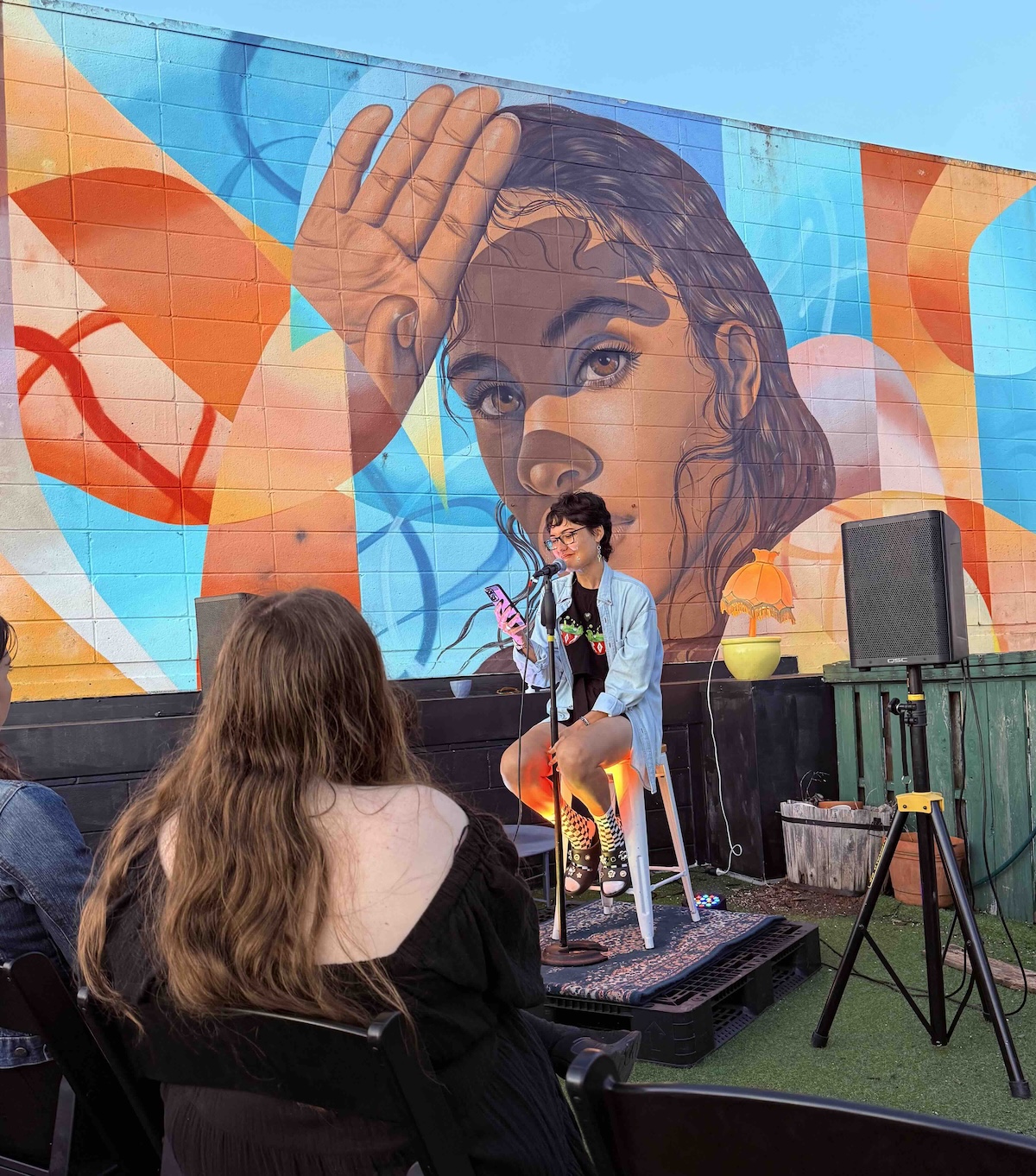
Elina reading poetry at a Storyo event in front of an Auckland mural Elina at a Storyo event

I guess Auckland is just like a city, right? It's just another city. I feel like New Zealand is one of those places that requires you quite a bit to feel like home. You kind of need to feel the lay of the land. Now Auckland is my love. I love Auckland and it feels like home everywhere I go. It's all mine. But when you first arrive, it's sort of like a city and you're like, okay, nothing stands out.

It's not really lively as like other cities are. If you walk around the streets, there's like no one. I remember walking and being like, where is everyone? Why is it so quiet?

Two cities

Kazakhstan was very different. When I was back home at 10pm I went out. In between every apartment building complex, there was like a playground in the middle of every apartment complex.

At 10pm there'll be like 30 kids playing, and their moms are sitting watching them, chatting to each other, and kids are all going crazy.

We don't really have that in New Zealand. I think that makes it harder to feel home, 'cause we just don't see people as much. So it took me a while to feel home.

When NZ became home

NataliaWhen did you have a moment when you felt, okay, this is starting to feel like my home?

ElinaI was in a relationship when I arrived. After I arrived, I was in a relationship with someone for a year and a half. It was quite a bad relationship. I was 17, 18, he was a little bit older, like 21, 22. It was quite abusive, like manipulative.

That just left me feeling really even less like home. When we broke up I was like, I just don't want to come back to New Zealand. We were looking to move to England. Can I relocate and change my degree to go to London? It was just too much paperwork. I would have to repeat another year of university, and we were like, can't afford that.

So I was like, okay, well let me just come back to New Zealand and see. I came back, it was my second year at university. And suddenly I feel like, the bad-relationship energy lifting. It had been enough years. I remember that summer just felt. I remember crying in bed being like, oh, I feel like home here.

I have like enough friends now. Places that I go to. I'm not anymore like a tourist. I'm not a tourist anymore.

I go to those places. Spending time in the Domain, or in Mission Bay, or in Takapuna. It felt local, homey. Maybe two and a half years post coming. Maybe three years.

No one to call

NataliaSometimes you arrive and you're a migrant and you're going through some emotions. Being away from home, going through that relationship being so young. Having no one to give you a hug, no one that knows you well enough.

ElinaThat well-enough thing is bigger. Because people know you, but someone who knows-you-knows-you, it's different. And for me it was also like shame, I guess. Or embarrassment. Both probably when I was younger. I was always such a strong, opinionated feminist vibes.

And then how am I. Like, it was shameful to be like, I'm in this relationship that I'm controlled by this person. I'm not supposed to text my friends. I'm not supposed to talk about this relationship to anyone, because then he would get upset over it.

I don't think my family really knew how bad it was. My mom and my friends didn't really know how bad it was. Only after it finished, I was like, oh yeah, all those things happened. They were like, why didn't you tell us? And I'm like, I just felt, you're far away. I didn't want to worry them.

It really taught me a lesson. How easy it is to end up in those things. I'm really grateful for that experience. I had no ties to this person. I didn't have kids with him or married or anything. And yet, spent a year and a half in that toxic situation. You can end up in that easily.

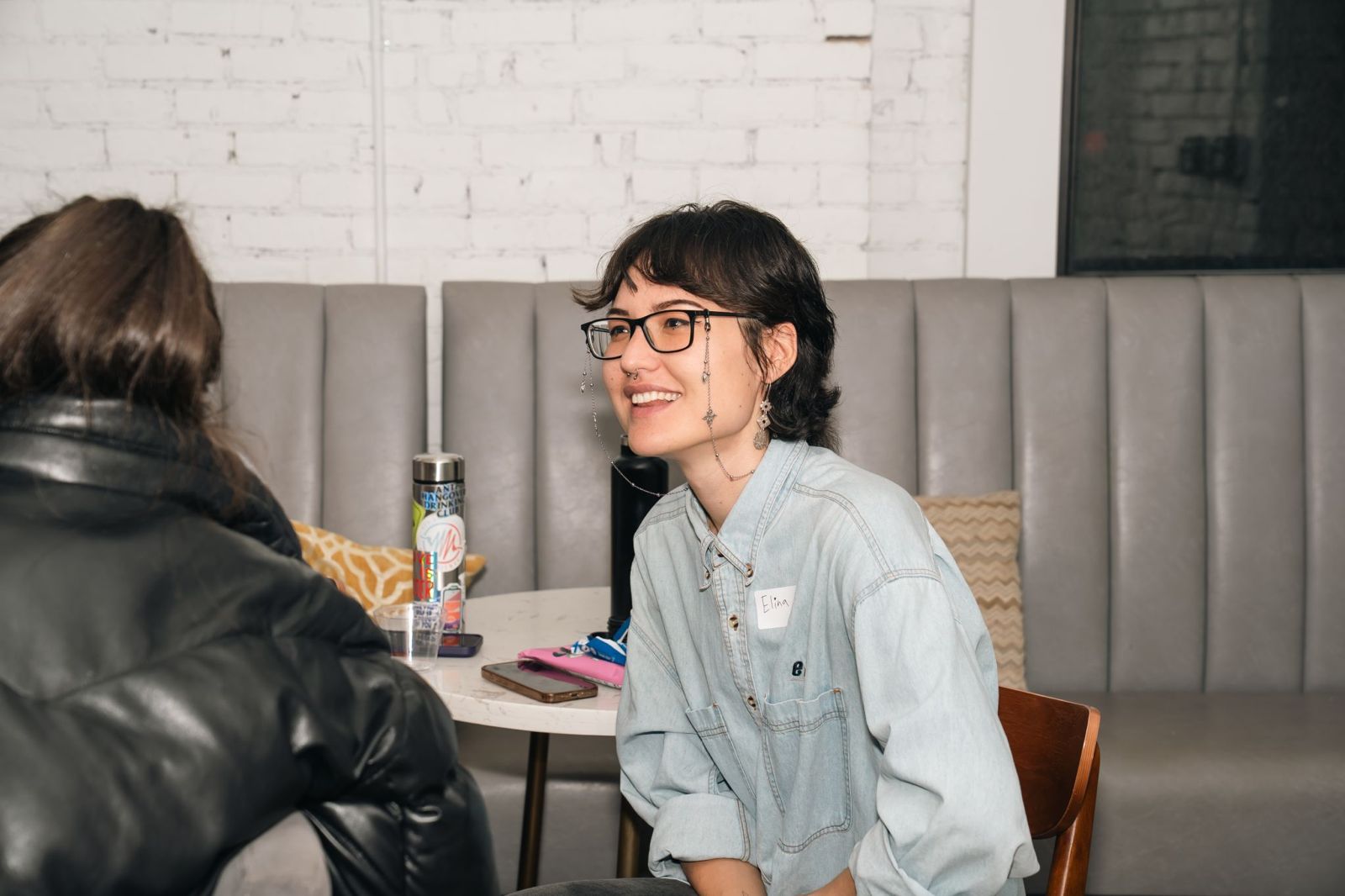
Elina at a community gathering, mid-conversation Finding her people in Auckland

Biomedical sciences

NataliaYou finish uni and what do you do? Because biomedical science is a little bit different to what you ended up doing later.

ElinaI was going to study medicine, but then I didn't. We arrived and were told only after I started that the medicine international fees were like $60,000 a year, and biomedicine was like 25. We were like, oh, well, we planned for 25, which is still heaps. And it increased every year by like three to $5,000.

So I was like, oh, I guess I'm not doing medicine. I didn't know that until after I arrived. I'm like, okay, good to know.

Cancer research

I did biomedical sciences and I loved it. I did my undergrad and postgrad. I did my thesis in cancer research, breast cancer. I worked in a lab for a year and a half, almost two years. University lab, based at the university. Most laboratories are based at the universities.

My strong things have always been like community and contribution. How do I contribute to the world? How does it make the world a better place?

As a teenager and as a kid, the only way I knew was through medicine or science. That was the only one. And then I got a bit older and I started working and I was like, oh, there's all this other ways.

I went to a bunch of conferences that were like design conferences in Wellington. I got a free ticket from a friend and I was like, oh my God, there's all these beautiful other ways people do. Through technology, through writing, through this, through that.

Learning a new language of science

NataliaFor me and for you, English is our second language. How was it coming to New Zealand and doing biomedical science and cancer research in a second language?

ElinaI was young enough, like I was 16, right? A lot of the stuff, I would struggle to do that in Russian, because I learned the terms in English. In a funny way in science, because a lot of it is Latin based, the words are similar. Lots of words for what happens within a cell, lots of words for proteins. If you say them in Russian and in English, they're kind of similar sounding, 'cause they come from Latin.

My English was at a level good enough that I could speak. But I do remember sitting at school first year, second year, we had some students in front of me, international students with separate translator apps. They would be sitting and translating like all these words. You were learning the entire new language of science, in English. I think I'm just lucky that I was young enough to pick up that stuff.

I struggle to say what I do in Russian now. If I went back home, people'd be like, what do you do? And I'm like, I don't know how to say that in Russian. I've only learned it in English.

The first pivot

I started doing way more things. I was part-time contracting, working. I was doing some online courses. I applied for a job at Ernst & Young, in their health team. It was like a health strategy team. I didn't really know much about it, but my friend used to work there. I interviewed, it seemed cool and different, and I was like, okay.

That's kind of how I started my path out of it. And then I worked for a startup in music education. Then I worked in Ministry of Education. Then I worked at the hospital. And I did my degree in the middle there. I did human rights, a postgraduate degree at AUT for a year during COVID.

It's always remained about contribution. Or doing something good for the world. But it's changed a lot.

Storyo begins

NataliaWhen was the moment when you said, okay, I want to start something, a project of my own?

ElinaI kind of grew up around it. My dad was writing his own stuff. He was a writer. He had his own book series, political books, and he did a bunch of other political work and worked for himself a lot.

My mom did her MBA, so she worked in so many different jobs and would tell us about it. She had all those ideas for businesses that she wanted to do. But she was like a single mom doing all the things. She didn't have time for her own stuff, but she talked about it.

I actually really didn't want to work for myself. 'Cause I always thought I want to contribute to someone else. If my idea was to contribute in community, there's enough things out there to contribute to. So I never felt like I had to start something of my own. People are already doing wonderful things. Why start another thing?

But what I did love is, I had all these random little ideas for projects. When I was at university, I started making personalised gift baskets for people. I only made literally like five or six. I used to run painting classes, because I love painting and used to go to art school when I was a kid. Like a paint-and-sip thing that's really common now. I started doing them for my friends, maybe around like 20 of those.

It was more like these fun projects that I loved. But then for a lot of them I stopped because I'm like, actually I really enjoy painting and now it's becoming a chore to paint. I've done enough that it felt fun and challenging, that I can stop now.

When I was working at the startup in music education, I also was core-running Women in Tech Auckland. I was volunteering in the emergency department at Auckland Hospital. I was volunteering on the committee for St John, Auckland Central, for Women in Tech. All of that was always around the contribution.

Elina holding a microphone at a Her Migrant Spirit recording

The first written interviews

Around that time, my partner was running his own business. He was running like a marketing agency for small businesses, and he was interviewing small business owners about their businesses. He came to me and was like, hey, you know, a lot of people that I try to find online are like white men. All these interviews are with white men. And obviously a lot of my work was in diversity, inclusion, equity. So he was like, hey, what if we did, like, women specifically?

And then it kind of evolved and I'm like, actually, what if we did, not necessarily business owners, but everyday people. It was just like a cool idea. He had a few interviews already. He built a website. He was like, actually I'm also like a dude. I would love your help.

I just loved it. I kind of overtook it from him to be honest. I was like, I'll take it. I changed it quite a bit. I was like, actually it'll be women and gender-diverse folks. Also mostly people of colour. Stories of everyday people, and not like 30-under-30 Forbes founders of whatever.

For the first six months I was just like: do not look at stats. Do not look at anything. If you enjoy it, just keep doing it.

And I did really enjoy it. I interviewed like 30 people in the first six months. I was just reaching out to people. I was working on the weekends or in the evenings and writing. It was all written interviews.

It wasn't like, I want to build a community organisation, blah blah blah. I was just like, I just want to interview friends. I really love it. I love these stories. It helps me. It helps them. Wonderful. If someone reads that, great, but if no one reads it, it's fine.

30 to 200

It evolved so much. At every step of the way, I didn't know what I was doing. After I did all the written stuff, I'm like, okay, I don't want written anymore. I've done written enough. I want to do video. I've never held a camera in my life. Okay, let's do video. I don't know how that works. YouTube, I guess.

It's funny because the people out there who are basically storytellers and social media people are creatives. And I'm like, I'm working in healthcare and education as a tech, and on all this, like, DEI boards and hospital volunteering.

Years later, someone asked me, oh, so who is your producer? I'm like, what is a producer? They're like, who's the director? I'm like, I don't know what the difference is. I remember Googling director versus producer. I'm like, oh, okay. Both are me.

When we started doing events, I'm like, oh, this is it. I love in-person stuff. The whole idea was not to try and become a digital platform with views and engagement. The whole idea was that people who tell the stories feel valued and valuable and seen. And people who read them also feel seen, because hopefully they relate.

I love the in-person way better. It's way smaller numbers, but way more depth.

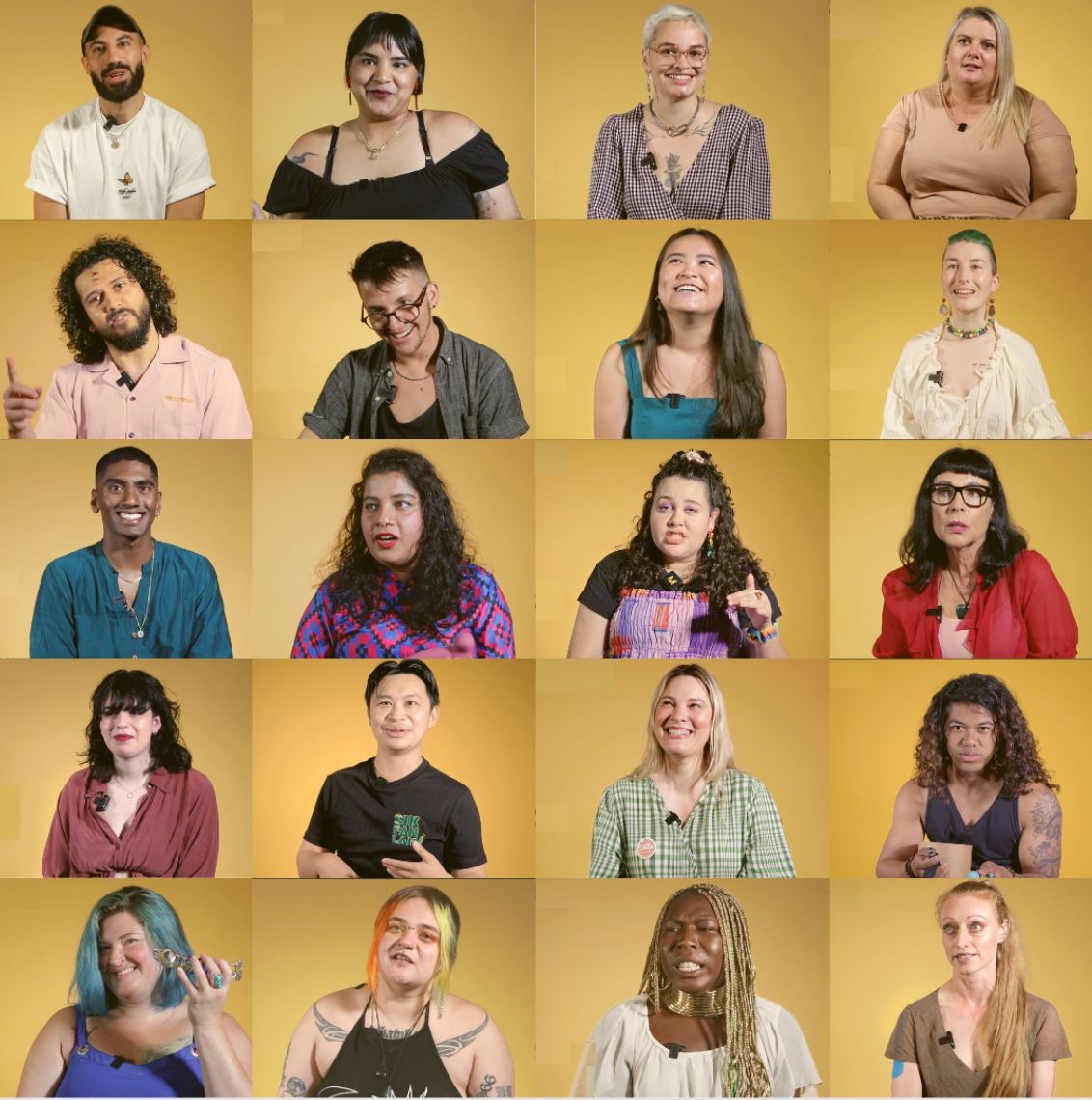
A grid of 20 portraits of people Elina interviewed for Storyo, all on yellow backgrounds A few of the 200 people Elina interviewed for Storyo

The 10% I needed

To run events, I need money. Where do I get money? I'm going to reach out, because I worked in tech, I'm going to reach out to companies I know and ask for sponsorship. If I'm getting money, I need to register as a company. How the hell do I do that? I need to pay taxes. Oh my God, how do I pay taxes?

My partner and friends. I tried to Google. IRD had a few online webinars or whatever. I remember being like, oh, this is way too much detail. Sometimes the course would be like, oh, I understand 90% of it.

I need the 10%, but I just don't want to sit through the 90% of it.

Most of my close friends now run their own things. I would be like, hey, what do you do? They're like, oh, I have an accountant. I'm like, oh, accountant, great. Which accountant? I would just reach out to accountants. Some accountants were like, you are way too small. You don't need an accountant. But I'm like, I just don't know what I'm doing. They're like, okay, well, you can just learn. Here's some links. And I'm like, I do not want to learn. Can I just pay you? I'll just pay you some extra money. Sounds good.

Friends, and friends of friends

I would have like comments from people. They met their best friend through an event they attended. Or they got a job through Storyo. One person realised they were on the spectrum and got diagnosed, through coming to one of the events. I gave them money out of pocket to go and do the diagnosis in the hospital. I'm like, this is the work that I love doing.

For a long time this word "community" felt like, what is this community, this nebulous build-a-community? And who is this community? My friend Kieran defined it for me. He was like:

It's just friends, and friends of friends.

I love that. And Storyo has become like that. Most of my best friends I met through Storyo. Most of the people I collaborated and worked with, I met through Storyo. They would come to events and bring their friends, and we'd have fun together. And they would talk about things that matter to us, whether it's poetry or sexual health or domestic violence or being a migrant.

Try it yourself

A love letter

To the younger version of you, on the plane to Aotearoa. Tell her what you wish someone had whispered before she boarded.

A love letter

To you at ..., on the plane from home to Aotearoa

You're scared of [your fear]. That fear makes sense.

I need you to know: [what you want her to know]

You're going to land. You're going to cry. You're going to wonder if you made the right choice. You did.

You will find your people. You will build a life. You are more loved than you can see right now.

I'm proud of you for getting on that plane.

All my love, You.

The pause

NataliaWhat are you doing now? Has Storyo finished? Is it on pause? You're living in New York.

ElinaThe last series I did was the sex and health series. We did 25 people, talked about topics of sexual health, reproductive health, periods, and pleasure. That was a big one. I probably went all out. I got external funding from Foundation North. I got funding from tech companies. I got my own money in it. I hired contractors. It was published through RNZ, on RNZ social media accounts. And I did probably 15 events, mostly Auckland.

After that I was like, I'm going to take a bit of a break before I go to the next one. But then I moved to New York and I was like, let's just pause this for now.

It's funny 'cause it's sort of sitting there. I'm still doing taxes, and I'm still paying the IRD and ACC and everything. But it's just sitting there. Storyo has never just evolved every time. Every time it evolved with me. Now we do events, now we do workshops, now we do storytelling, now we do the education part.

So whatever I'm doing next will be like a part-evolvement of that. It's kind of a big container for storytelling, community-building work.

A blank slate at 32

Honestly, the real answer? I don't know. I've always been a big person on transparency and honesty. I did acting school. That's why I came to New York. To the acting school, randomly, for a year.

I just came back from being in New Zealand over winter. I'm now looking, being like, okay, I want to maybe go back into healthcare, service design. I love New York, but it's a new place for me. I don't really have a network. I don't know many people here.

In New Zealand, in Auckland, there's almost no place that I would go that I would know someone. When you live there long enough, it's small enough country, city, to just know people. So I'm kind of figuring it out.

Because Storyo was never my main thing. I never did Storyo full time. It was always like, I was working always, and or starting and doing Storyo on the side. And it never made enough financial money to actually live on it. I would never pay rent off that. I tried for a bit to see if I could do that, but if I'm honest, I didn't want to sacrifice any of my values.

I didn't want to do any work for people that I don't 100% align on.

New Zealand is quite small. It's just really hard to do any creative community project full-time. I don't know many people who do, actually. So I was like, okay, that's fine. I'm just going to do it. I'm happy with it. I'm happy for it not to make money, and do meaningful work through hospital work for example, get paid for that and then do Storyo in the remaining time.

Now I'm kind of like, honestly, it feels like a blank slate. I'm turning 32 soon, but I feel like the thirties have been like years of change for me. Things are changing. I might come back to New Zealand. We'll see.

Redefining success

NataliaHow do you define success for you? What about Storyo made it successful for you?

ElinaTo be honest, I don't even use that word. I don't really define success for myself. We have too many connotations with that word, tied with the very capitalist notion of money-making or being known or whatever, or numbers. The word itself feels very loaded. So I've sort of stopped using that as a definition at all.

A big part of Storyo, I was interviewing people to ask them those questions. Imposter syndrome, or not feeling like they're good enough, or whatever. And realising that most people feel this way. We live in the systems that were created before us, that kind of support us feeling this way. And I'm like, I don't want to feel this way.

If you're enjoying it, there's joy, whether it's through challenge or just like creativity. And for me it's like also fulfilment, through this feels like a soul almost work. I did this course recently. They talked about ancestral assignment, like as if you get an ancestral assignment, this is the work that you're meant to be doing. I definitely felt that way of Storyo.

You see that you're not harming anyone and hopefully you're contributing to someone's wellbeing in the world. That, I think, would've felt what feels good. Success, quote-unquote.

In the current structure there is this thing of, the work we do, we should see the fruits of it. But actually, if you think about the history of the world, so much amazing work happened, people have died without seeing the fruits of their labour, whether it's revolutions or anything. So it's nice to reframe and be like, actually, I might not see the fruits of my labour.

But I know that this work will contribute. It will sow enough seeds that might bloom.
You can't ever control. You don't even know what kind of things will bloom after you pass.

200 people whispered the same thing

NataliaThere's lots of migrant women in New Zealand who might be thinking about starting their own business or starting a community group. We all experience that self-doubt, the imposter syndrome. Do you have any words that you can share with them to help them through?

ElinaI feel like it's such a big thing whenever you want to give words of advice, because I'm like, who am I to give advice to amazing migrant women who freaking made it to New Zealand?

One thing I'd probably say is what I've learned through Storyo, through the people I've interviewed. You are enough as you are. This is your wonderful, magical, and you create so much. In your little bubble of influence, whether it's your family or your neighbours and friends.

There is this pressure, especially the social media. Now when they ask Gen Alpha, the younger population, the number one job that people want is not like doctor or firefighter. It's influencer or streamer. I think it's because we're constantly bombarded with people who are starting their own thing and making money off their own whatever. And I think it makes everyone else maybe feel a bit inadequate.

Having interviewed 200 people who are all wonderful. Social workers, teachers, sex workers, unemployed people, artists. And I'm like, wow, we all feel this way, but we don't want to feel this way.

Elina laughing with a microphone at a community gathering Everyone is amazing in their own beautiful way

Everyone is amazing on their own beautiful way.

200 people whispered the same thing

Whisper it back

If you've ever felt you're not enough, the women Elina interviewed felt it too. Write it down. Let her whisper the answer back.

What you whisper to yourself:
I'm not enough.

You ARE enough.

You don't need to be more [whatever] to be worthy.

200 people whispered this with you.
You are not alone.

Elina

Start small

Another thing is, the way we perceive starting is quite complicated. There's like all these things you have to do, and you have to get it all figured out, and blah, blah, blah. And I'm like, I think most people that I know, including myself, starting anything. You don't know anything and you won't know anything, and you will just keep, you just have to keep going. Okay, I don't need to get it all perfect.

I'm starting a podcast series at the moment. I decided a few weeks ago.

As you start, you'll be like, okay, there's 10 more things to do. Okay, cool. We're just going to do one at a time. There is no need to do all 10 perfectly.

If someone wants to start, like, baking. Their own home food for their community. They don't need to think about, like, the shop they want to open, and where it's going to be. Before they start, you can just literally start making food and offering it to three neighbours. That's already scary. That's a good way to do it. Versus thinking through all the things, because then we will think ourselves out of it, because it's just too much.

If you think about three people around you, that's a good way. That's how I thought about Storyo.

It doesn't need to grow big. You might be like, actually three is plenty and I'm tired already. I don't want to do anymore. Cool, great. Or three is perfect. Or 30 is perfect and I'm actually making money now. Or whatever it is. I'm actually happy doing this with other people. Versus thinking about, I need to open an award-winning restaurant. That feels like too much.

A message to her younger self

NataliaIf you could go back in time to that 16-year-old Elina, packing her bags, going to New Zealand. If you could look at her in the eyes now, and look at your life now, what would you tell her?

ElinaOh my God, just give her a hug. Just be like, girl, you're in for an adventure. Nothing. There's no advice to give. There's no nothing. She did really good with what she had.

I feel like sometimes I need someone. At the moment I feel like I need a 50-year-old Elina to come back in time and give me some words of advice.

And it's funny, if you ask me when I'm 50, I probably will give the same answer. She's exactly. She needs to be. She's learning what she needs to learn.

You're going to be okay. You will be okay. You will be okay.

I think sometimes I feel like, I need the hug now. Because I'm like, am I gonna be okay? Am I doing the right thing? What am I doing?

At this moment I look back at 32, at every point in my previous before, I would say, yes, you are. You're doing okay. You're doing age okay. So at 32, I need an older me just telling me that I'm doing okay. I hope that's what I can tell when I'm older.

But yeah. 16-year-old. You doing okay? You'll be okay.

Thank you, Elina, for sharing your journey with us.

Connect with Elina ← Back to the series